Inside a Pipeline Giant’s Bid to Block Greenpeace’s Historic Anti-Intimidation Lawsuit
by Josh Voorhees
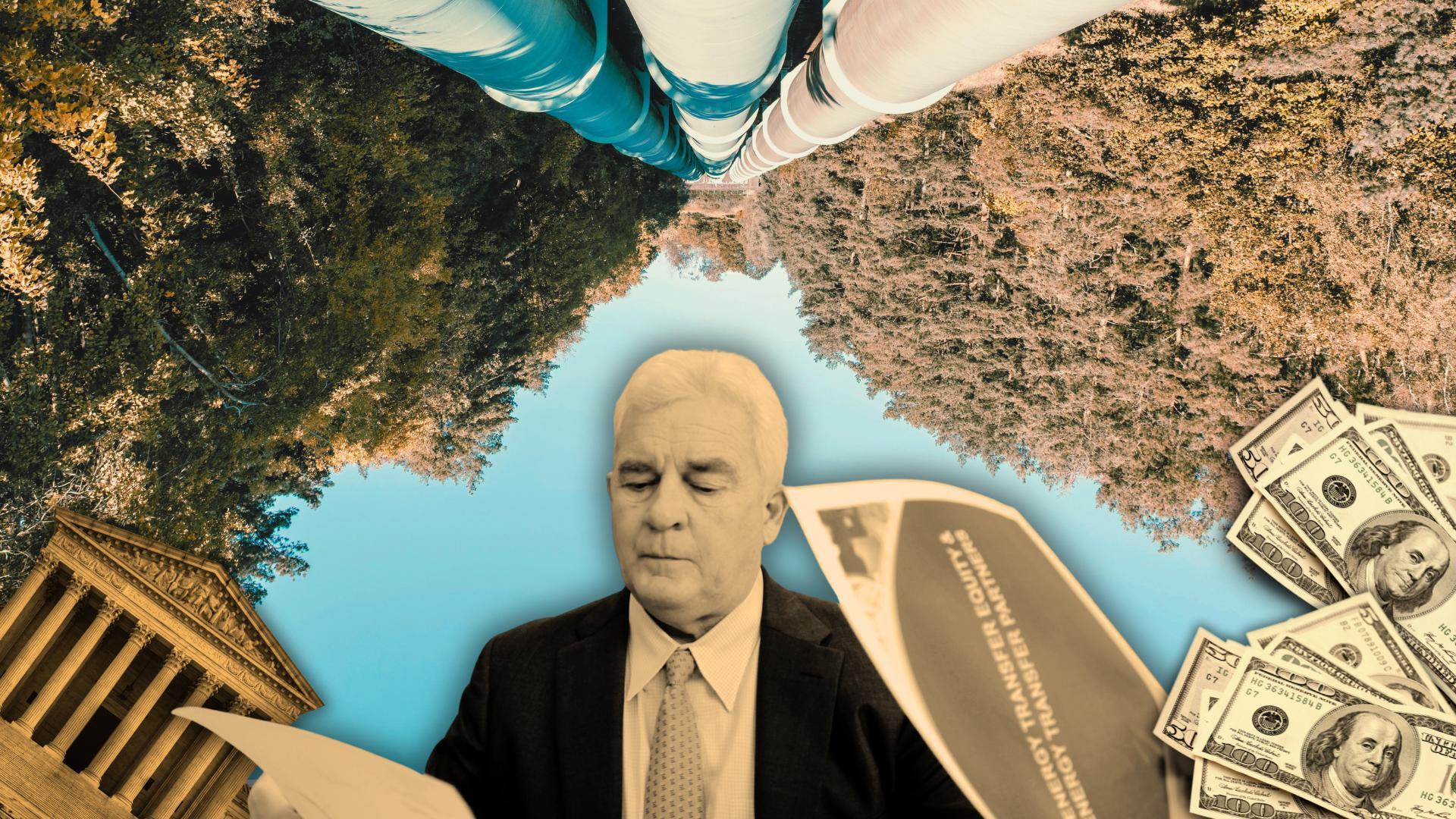
Energy Transfer is using an astroturf group run by a powerful DC shadow lobbying firm in a bid to block a first-of-its-kind countersuit in the Netherlands.
Energy Transfer, the pipeline company behind the controversial Dakota Access Pipeline, has deployed a decade-old astroturf group it secretly funds in a bid to stop Greenpeace from suing it in Europe for intimidation, a Fieldnotes investigation in partnership with Drilled has found.
Grow America’s Infrastructure Now, or GAIN, as the group is known, presents itself as a “broad coalition of businesses, trade associations, and labor groups.” In reality, it is a second-generation front covertly funded by Energy Transfer and run on its behalf by the DCI Group, a powerful Beltway firm specializing in crisis communications and shadow lobbying, according to a review of court documents, business filings, and other public records.
Energy Transfer has used GAIN and a predecessor group known as Midwest Alliance for Infrastructure Now, or MAIN, to make its case in the court of public opinion since the Standing Rock protests over the company’s controversial Dakota Access Pipeline began in 2016. Now GAIN is coming to Energy Transfer’s defense in the court of law in a case with far-reaching impacts on free speech and protest both in the United States and abroad.
GAIN filed an amicus brief in North Dakota this past month backing the company’s request that the state supreme court block Greenpeace International from countersuing it in the Netherlands. In effect, Energy Transfer indirectly submitted a friend-of-the-court brief on its own behalf in a bid to convince a North Dakota court to intervene in a foreign one.
Greenpeace’s countersuit, the first major test of a new E.U. directive aimed at preventing lawsuits being used to silence critics, is a response to Energy Transfer’s lawsuit against Greenpeace in North Dakota for its role in the pipeline protests; the company won a nine-figure judgement against Greenpeace entities in that case earlier this year. If Greenpeace International is successful in the Dutch court, it could recoup a portion of the several hundred million dollars Energy Transfer was awarded in North Dakota. If it isn’t, it could spell the end of the environmental group’s U.S. operations.
Energy Transfer chairman Kelcy Warren, a Trump megadonor with an estimated net worth of more than $7 billion, has spoken openly about his desire to financially cripple Greenpeace. "What they did to us is wrong and they're going to pay for it," he said in a 2017 television interview. When later asked by a reporter if his goal was to “cease funding for organizations like Greenpeace” he responded: “Absolutely.”
Neither Energy Transfer nor DCI Group responded to requests for comment. Both have previously declined to say publicly whether the Beltway firm is working for the Texas pipeline company, instead stressing that the company wasn’t an official “member” of GAIN. However, Energy Transfer vice president Vicki Granado admitted under oath in 2023 that Energy Transfer hired DCI, that DCI launched MAIN on Energy Transfer’s behalf, and that Energy Transfer funded both MAIN and GAIN.
Excerpts of Granado’s deposition were entered into the court record the following year, and first covered in Drilled’s SLAPP’d podcast. Asked whether DCI “set up” MAIN, Granado replied, “Yes.” Asked whether Energy Transfer approved DCI doing so, she replied, “We did.” And asked “who funds GAIN,” the long-time Energy Transfer exec replied, “We do.” Granado estimated then that the company was spending at least $100,000 per month to fund the group.
The existence of GAIN’s amicus brief was first reported by the New York Times.
Hiding in Plain Sight
Energy Transfer has avoided publicly disclosing its connection to MAIN and GAIN. DCI Group, meanwhile, has largely been hiding in plain sight.
Since fall 2016, MAIN and GAIN’s chief spokesperson and public face has been Craig Stevens, a vice president at DCI. The Beltway public affairs shop was founded in the mid-1990s by GOP lobbyists with ties to the tobacco industry and more recently has been linked to an alleged global hacking-for-hire campaign targeting prominent U.S. climate activists critical of Exxon, a long-time DCI client.
Over the past decade, Stevens has in his role as MAIN and GAIN spokesperson been quoted by more than two dozen news outlets, including both national newspapers and local outlets, and taken part in a number of public events—with very few exceptions without a mention of his DCI job and never with a disclosure that Energy Transfer was his client.
In September 2016, for instance, Stevens appeared on an academic panel on the meaning of the pipeline protests alongside scholars and members of the Standing Rock Sioux. Two months later, he penned an op-ed in the Washington Times decrying the role of “fake news” in the decision to deny the pipeline’s permit. In May 2021, he was given a speaking slot on stage at a North Dakota chamber of commerce event alongside the state’s entire U.S. congressional delegation. And in late 2023, he featured prominently in an Energy Transfer-produced video that ran as sponsored content in Fortune. Each time, Stevens was described only as a MAIN or GAIN spokesperson.
The DCI Group has long boasted to potential clients that it has “the deepest and most sophisticated political network in the public affairs industry.”
According to Granado’s sworn deposition, DCI has run MAIN since its launch in 2015. Stevens became the public face of the group when the Standing Rock protests began to draw national attention in fall 2016, according to a review of MAIN press releases.
Stevens issued his first public statement on behalf of MAIN on September 6, 2016, just days before Energy Transfer’s Warren publicly announced plans to more aggressively defend the pipeline in the press. “It has not been my preference to engage in a media/PR battle," Warren wrote in a memo to employees that was also released to several media outlets. "However, misinformation has dominated the news, so we will work to communicate with the government and media more clearly in the days to come."
The same day as Warren’s memo, a number of suspicious social media accounts posted pro-pipeline messages on Twitter, several of which cited and linked to MAIN material. "Protesters for #NoDAPL trespassing on private land and picking fights," wrote one user with a single follower and a profile pic of actress Eva Longoria. "Dumb way to spread a message." Stevens quickly denied that MAIN was involved. “As far as I know, and [I] think I know, the MAIN Coalition had nothing to do with them,” he told DeSmog, which was first to report on the posts.
After Energy Transfer completed the Dakota Access Pipeline in 2017, MAIN was rebranded as GAIN and expanded its purview beyond the Midwest. According to a federal database of tax-exempt entities, MAIN never registered as a non-profit with the IRS but GAIN did in 2019 as a 501(c)4. According to its filings, the group has no salaried staff, is registered at an address shared by the Delaware offices of a mid-Atlantic law firm, and does not disclose the source of its funding, the vast majority of which, the group claims, has been spent on advertising.
Neither of the two officers listed on GAIN IRS filings appear to be DCI employees, nor are they listed on the front group’s website. But one of the two, the group’s president, is Travis Terranova. Someone with that same name is an insurance agent in western New York who graduated from the same high school as DCI’s Stevens at or around the same time, according to public records and the two men’s social media accounts. Neither Stevens nor Terranova responded to requests for comment on their relationship to one another.
‘Illegitimate Corporate-Funded SLAPP Harassment’
GAIN isn’t the only industry-entity to support Energy Transfer in its bid to convince an American court to influence the European case. The American Energy Association, a trade group whose members include Liberty Energy, a fracking company founded by Energy secretary Chris Wright, also filed an amicus brief on behalf of the pipeline company. So too did the Institute for Energy Research, a “free-market” think tank with ties to Charles Koch that has received funding directly from Exxon and the American Petroleum Institute.
Greenpeace’s Dutch lawsuit is the latest development in a legal battle that began in 2017 when Energy Transfer first sued Greenpeace in federal court alleging it had orchestrated the Standing Rock protests that ended earlier that same year. After a federal judge tossed the case, Energy Transfer refiled a narrower version in North Dakota, one of several states without laws against what are known as SLAPP lawsuits, or strategic litigation against public participation.
Earlier this year, a Mandan, ND, jury ordered Greenpeace entities to pay Energy Transfer nearly $670 million. Last month, the judge who oversaw the case cut the award nearly in half to $345 million, citing technicalities. Greenpeace maintains it played only a supporting role in protests that were largely peaceful, and says it plans to appeal the ND verdict.
A group of lawyers who monitored the trial raised a number of issues after the verdict, including the jury’s extensive ties to the local fossil-fuel industry and the presiding judge’s limited experience in complex First Amendment cases. ”Our fear that this was an illegitimate corporate-funded SLAPP harassment case was confirmed by our observations,” the Trial Monitoring Committee, as the group called itself, said in a statement.
Now, Energy Transfer is attempting to stop Greenpeace’s Dutch countersuit from moving forward. The pipeline company filed an emergency motion in July asking a North Dakota judge to block Greenpeace from proceeding with it. That motion was denied in September but the company then appealed to the state supreme court, where oral arguments are scheduled for December 18, 2025.
If Greenpeace’s ND appeal and Dutch countersuit fail, the environmental group says it would jeopardize the future of its US operations. Others say the impact would be far greater, chilling free speech and protest both in the US and abroad.
“These cases have a dual impact,” Charlie Holt, the European lead for Global Climate Legal Defense, told the Guardian earlier this year. “On the one hand, they have a devastating effect on the individual campaigner, reporter or organization, but also they have this systemic impact on democracy because they work to block accountability and shut down information about corporations, politicians or other powerful individuals or groups.”

This story was published in partnership with:

Sign up for our free newsletter on Substack
By subscribing you agree to our Privacy Policy