Behind the Organized Assault on Climate Regulation, a Rented Mailbox in a Suburban Texas Strip Mall
by Josh Voorhees
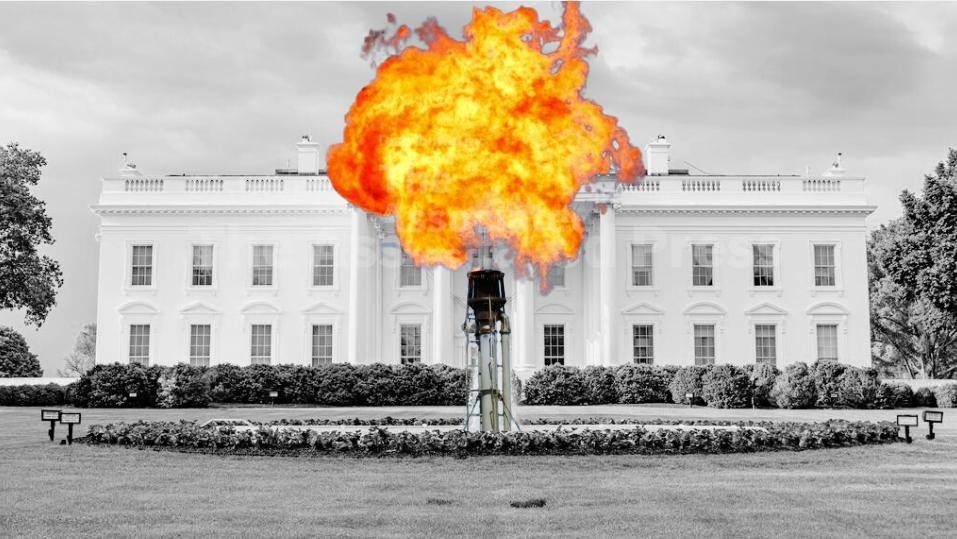
A Fieldnotes investigation reveals a little-known legal group founded by then-former, now-current Trump officials has served as both a front and middleman for oil & gas interests and the far-right culture warriors who pushed to reverse the endangerment finding.
An obscure nonprofit founded by then-former, now-current Trump officials, funded by wealthy conservative culture warriors, and backed by oil & gas lawyers is playing an outsized role in Donald Trump’s attack on federal climate regulation, a Fieldnotes investigation has found.
The nonprofit, the Center for Environmental Accountability, boasts online of “championing transparency and accountability in environmental and energy policy.” In practice, it passes dark money from deep-pocketed conservative organizations to well-connected oil & gas lawyers, and then passes the work of those same attorneys off as its own to the government. And it does both while taking steps to obscure its ties to nearly every corner of the climate-denial movement, from those who argue the scientific community’s urgent warnings are overblown to those who say that rapidly rising greenhouse gas emissions will be good for humanity.
In the past year, many of those same CEA lawyers have rejoined the Trump administration, where they worked to undo what is known as the endangerment finding, the scientific determination that greenhouse gases pose a danger to human health and therefore must be regulated under the Clean Air Act. The finding underpinned nearly all federal climate regulations, including those on motor vehicles, power plants, and oil & gas operations. U.S. Environmental Protection Agency chief Lee Zeldin called the reversal “the single largest deregulatory action in the history of the United States.” Previously, he’d promised MAGA supporters the move would be “a dagger in the heart of the climate change religion.”
Details of this Fieldnotes investigation were first reported by Politico, which was provided with an embargoed copy of this report.
Launched in 2022, CEA is registered at a rented private mailbox in a suburban Texas strip mall and does not currently list a single employee on its website. The group, however, is connected to far-right billionaires, prominent fossil-fuel influencers, Christian nationalists, libertarian think tanks, major industry lobbies, and top-tier law firms that represent corporations spanning the length of the oil, gas, and petrochemical supply chain, according to federal and state filings, government emails with industry lobbyists, and other material obtained by Fieldnotes.
At least nine current Trump appointees were associated with CEA prior to joining the administration, either as a member of its board of directors or outside legal counsel—eight of whom did so while also directly representing industry interests via their work for specific companies or trade groups. The ninth, founding president Marc Marie, was simultaneously registered to lobby for a fossil-fuel group that was created explicitly to advocate for deregulatory actions that are too "controversial" for trade groups to publicly support themselves.
At least half of those CEA-affiliated Trump officials were involved in the endangerment reversal, including Energy Department general counsel Jonathan Brightbill, one of the group’s founders. Before rejoining the Trump administration last year, Brightbill led a secret “Day 1” effort to lay the groundwork for the coming repeal; at the same time, he was being paid by a number of oil & gas interests including the American Petroleum Institute, according to his ethics disclosure.
Also involved in the repeal were EPA deputy administrator David Fotouhi, whose client list included Chevron, Energy Transfer, and the U.S. Chamber of Commerce before becoming Zeldin’s second in command; and EPA assistant administrator Aaron Szabo, who lobbied for API, American Chemistry Council, and other major industry groups before being picked to lead the agency’s office of air and radiation. Asked for comment, EPA press secretary Brigit Hirsch described Fotouhi, Szabo, and a third EPA official who previously provided CEA with legal services, Nathaniel Tisa, as “incredible public servants who fulfilled all their ethical obligations,” adding that the “Trump EPA is incredibly fortunate to benefit from their policy expertise and legal acumen.”
API and other business groups began attacking the endangerment finding at its inception in 2009, first by challenging it in court and later—after exhausting their legal options—by attempting to constrain it to such a degree it would be effectively useless as a tool for reducing emissions. Industry’s response to last month’s reversal, however, has been somewhere between muted and mixed, a result of eleventh-hour concerns that the move will make it more difficult for fossil-fuel companies to shield themselves from legal efforts to force them to pay for their role in driving climate change. But CEA’s recent actions suggest the industry is already working closely with their far-right allies to address those fears by preemptively blocking those efforts in a post-endangerment world.

Mouthpiece and middleman
Since its launch, CEA has pulled double duty as both a front for and intermediary between the right’s ultra-wealthy culture warriors and oil & gas lawyers. The group receives large grants from conservative nonprofits with histories of climate denial, then uses that and other dark money to hire prominent industry law firms to write pro-fossil fuel regulatory petitions or legal briefs—and then turns around and submits those filings under its own name. Based on the group’s tax filings, it appears to pay roughly $50,000 per regulatory comment.
A review of metadata on more than two dozen regulatory comments, legal briefs, letters, and other material submitted by CEA to government bodies suggests that roughly half were drafted in full or in part by outside law firms that have worked directly for oil, gas, and petrochemicals companies, as well as for prominent industry trade groups that represent hundreds of others.
Lawyers from the firm Boyden Gray were involved in writing at least six CEA filings, according to the metadata, which can provide details on when a document was created and by whom. Founded by an heir to a tobacco fortune and former White House counsel to George H.W. Bush, the D.C. law firm has been a longtime champion of deregulatory efforts and more recently has emerged as a favorite of MAGA Republicans.
Several of the filings the firm was involved with were part of CEA’s ongoing effort to weaken an EPA tool that could help state officials craft climate lawsuits or laws now that the endangerment finding has been undone. Known as FrEDI, or the Framework for Evaluating Damages and Impacts, the peer-reviewed tool can estimate climate impacts across geographic regions and population groups through the end of the century. (The EPA website’s FrEDI page was taken down without explanation this past December, according to a review of the Internet Archive. EPA declined to say whether the tool is still in use.)
In addition to representing corporations like Liberty Energy, a fracking company founded by current Energy secretary Chris Wright, and Valero, one of the largest petroleum refiners in the world, Boyden Gray has also worked for ultra-conservative outfits including Christian legal group Alliance Defending Freedom and the Heritage Foundation, which called for reconsidering the endangerment finding in Project 2025, its sweeping far-right blueprint for Trump’s second term. Similarly, the law firm also wrote the amicus brief submitted by House Republicans this past October asking the U.S. Supreme Court to block cities and states from suing fossil fuel companies for climate damages.
At least one filing CEA submitted under Marie’s name originated from a document created by Szabo himself during his time at the law firm Faegre Drinker, according to the metadata, and several others can be traced to attorneys at Gibson Dunn, the white-shoe firm that is defending Chevron in a number of state climate lawsuits and also represents Energy Transfer in its ongoing legal battle with Greenpeace.
CEA has also paid the Keller & Heckman law firm, which like Gibson Dunn counts API as a client. And it has likewise paid the founder of CGCN Law, a firm that has represented another oil lobby, the American Exploration & Production Council, and has a “strategic relationship” with the CGCN Group, a government affairs firm that since 2020 has lobbied for API, ACC, and American Fuels & Petrochemical Manufacturers, among others. The CGCN Group, which previously employed EPA’s Szabo, also paid Zeldin roughly $100,000 to write a half dozen op-eds—some of which were never published—on behalf of its clients before he was picked to lead the agency.
Neither Boyden Gray nor any of the other firms known to have been paid by CEA responded to an emailed list of questions about that work.
‘Controversial’ positions and a ‘real address’ in a Texas strip mall
CEA is registered with the government at a rented mailbox in a small, third-party shipping store alongside a nail salon, massage parlor, boba tea shop, and marijuana dispensary in a Dallas-Fort Worth suburban shopping plaza. A private mailbox, according to the shipping store’s website, offers both “Anonymity & Privacy” and, unlike a PO Box, “a ‘real address’ [that] creates a more professional appearance for your business.”
According to its Texas business registration, CEA was set up with the help of Tony McDonald, a lawyer who specializes in “non-profit regulatory compliance” and who has worked for more than a decade for a nonprofit run by Tim Dunn, a Christian nationalist and oil billionaire. McDonald remains the registered agent on file for CEA in the state. Reached for comment, he said that he was “unaware of any involvement by Mr. Dunn in CEA.”
CEA received roughly $2.4 million in funding between its founding and the end of 2024, the most recent year for which its tax filings are publicly available. It did not disclose the source of that cash, but the majority of the dark money used to launch it can be traced to two other industry-aligned nonprofits.
The Searle Freedom Trust, an ultra-conservative grant-giving institution that has funded attacks on climate science, as well as on child labor laws and voting rights, gave $500,000 to CEA in 2023 for “education and outreach,” one of the largest of the more than 100 grants the trust handed out that year, according to its federal tax filing. Meanwhile, the Institute for Energy Research, a Charles Koch-backed group that has been funded directly by ExxonMobil, API, and the Searle fund and indirectly by AFPM, similarly reported sending $175,000 to CEA in 2023 for “program and supporting services.” It was the first grant that the fossil-fuel think tank reported giving out in nearly a decade.
Nearly all of the $1.45 million CEA reported receiving in 2024 came from a single grant from Greater Horizon, a so-called donor-advised fund that is effectively a black box that offers wealthy donors anonymity, immediate tax breaks, and the ability to spread out their donations over a number of years.
CEA’s website does not currently list any employees and appears to have only ever publicly listed one, Marie, who served as its president between his first stint at the Department of Justice’s environmental division and his current one in the same office. An archived version of Marie’s online bio from last year touts his service in government but makes no mention of his previous role as a fellow at the Koch-founded Americans for Prosperity or his then-current role as a registered lobbyist for the Energy Freedom Fund, which is run by Alex Epstein, a self-described “philosopher and energy expert” who has for years crafted extreme climate-denying talking points on behalf of fossil fuel interests.
When Epstein launched his lobbying effort in March 2025, he said he was doing so partly to advocate for “controversial-but-right public positions” that trade groups couldn’t take themselves for fear of a backlash. Reached for comment, Epstein said that he has never worked directly with CEA, but that he had authorized Marie “to do work for CEA in his off-time, so long as it did not conflict with his work at Energy Freedom Fund.”
Epstein, who played a key role in convincing congressional Republicans to gut clean-energy tax credits last year, has argued it is “immoral” to restrain development of oil, gas, and coal and called international climate talks an “anti-human, primitive-religious attempt to commit mass genocide.” Such extreme views have won him fans in the oil and gas industry, including ExxonMobil, Chevron, and Valero, all of which have invited him to speak at company events, according to Epstein. His current listed speaking rate is $37,000 for an in-person event.
Paul Salamanca, a University of Kentucky law professor and former Trump official, took over as CEA president when Marie returned to DOJ last year. In an email to Fieldnotes, Salamanca said that he left the group at the start of October 2025, and declined to answer specific questions about CEA’s work. Similarly, Anne Idsal Austin, a former Trump official who also led Trump’s second EPA transition team, is listed as CEA's principal officer on the group's most recent publicly available tax filing. She did not respond to a request for comment.

Planning for a post-endangerment world
The Trump administration’s push to reverse the endangerment finding was overseen by Jeffrey Clark, a lawyer in the Office of Management and Budget. Clark—later a key player in Trump’s failed bid to overturn the 2020 election—had challenged the endangerment finding since its 2009 inception and represented industry groups in their first legal challenge to it the following year. In between his first and current stint in the Trump administration, Clark was a top lawyer for the Center for Renewing America, a Christian-nationalist organization founded by Trump’s current budget director Russell Vought and funded by Dunn, the Texas oil billionaire.
During the first Trump administration, Clark led the DOJ’s environment and natural resources division, where he worked directly above four of the five men who would later found CEA, including Marie and Brightbill.
In between the first and current Trump administration, Brightbill worked with Mandy Gunasekara, EPA chief of staff during Trump’s first administration, on a plan to attack the endangerment finding. In a funding pitch obtained by Fieldnotes and first shared with the New York Times, Brightbill and Gunasekara suggested assembling a secret working group of contrarian climate scientists to compile “an arsenal of information” and recruiting veterans of past GOP administrations to draft regulatory documents. The pair estimated that they’d need $2 million to accomplish their goals, one of which was "[e]stablish operational confidentiality to prevent media and other conflicted sources from shaming participants and undercutting the work before it is done." In June 2022, they sought seed funding from members of oil billionaire Harold Hamm’s trade association, the Domestic Energy Producers Association, according to an individual with knowledge of the effort, and did the same from the Heritage Foundation, which provided at least some funding, according to the New York Times.
It’s unclear whether Gunasekara and Brightbill received the funding they sought from DEPA, but Hamm’s group later came out aggressively in support of the reversal; Brightbill became a founding director at CEA; and Gunasekara went on to author the Project 2025 chapter on EPA, which recommended that the agency “update” the endangerment finding.
More recently, Brightbill reportedly spent the start of 2025 working with the administration to set the reversal in motion. Meanwhile, Marie personally met with Zeldin in March 2025, while Marie was still leading CEA and lobbying for Epstein’s Energy Freedom Fund. According to public records released by EPA, among the topics discussed at that meeting—which Epstein also attended—was undoing the finding.
CEA has since its creation weighed in on the side of industry on topics as varied as permitting reform, auto fuel economy, and toxic chemicals. But its most recent focus has been on EPA’s FrEDI, which the group fears states will use as part of their efforts to hold oil & gas companies accountable for climate damages. In 2024, for example, CEA specifically asked Vermont not to use the tool as part of the implementation of its first-in-the-nation climate superfund law, arguing the tool overstates climate harms because it is based on a business-as-usual scenario in which governments don’t take significant actions to address rising emissions. In the same filing, CEA wrote that state officials “must account for the possibility that Vermont has not suffered harm from climate change and may have even experienced positive impacts.”
Late that same year, API and the Chamber of Commerce sued to block the Vermont law. This past May, the DOJ’s environmental division did the same. The government’s lawsuit was filed by Adam Gustafson, a former Boyden Gray attorney who now leads the DOJ’s environmental division. Shortly thereafter, Marie left CEA and joined Gustafson’s team at the department.

Sign up for our free newsletter on Substack
By subscribing you agree to our Privacy Policy