An Oil Executive's Notes Spell Out Industry’s Methane Duplicity
by Julia Kane
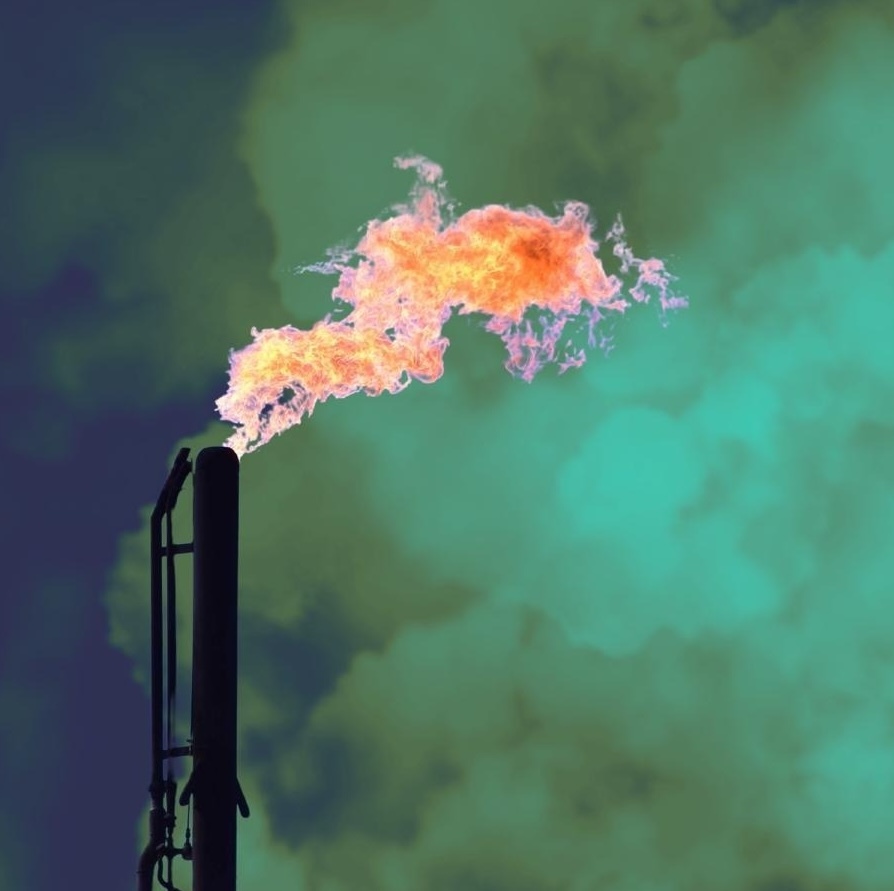
A Fieldnotes investigation reveals how industry is supporting the illusion of regulation while avoiding the real thing.
In the summer of 2017, oil & gas executives joined a private call to discuss a problem they felt they could no longer ignore. Despite decades of downplaying the amount of methane their companies were pumping into the atmosphere, a year earlier the Obama administration had taken steps to limit emissions of the potent heat-trapping gas. The first Trump administration offered a reprieve, but the executives sensed it wouldn’t last. Meaningful regulation to limit emissions seemed possible in the not-so-distant future.
And so the industry’s most powerful lobby, the American Petroleum Institute, had convened the call to offer an ostensible solution to the methane problem: a voluntary emissions-reduction initiative it dubbed the Environmental Partnership. It would be, API later promised publicly, a “groundbreaking” collaboration that would “accelerate emissions reductions” across the industry.
But notes from the meeting tell a different story: The initiative’s true aim was not to address methane pollution, but instead to solve the political problem those emissions were creating for oil & gas companies that had made pollution part of their business models.
“The hope - but far from the certainty - is to stave off future regulation,” BP’s David van Hoogstraten wrote in his recap of the call. API believed the Environmental Partnership was unlikely to outright prevent future methane rules, van Hoogstraten noted, but it “would provide the industry with ammunition to help us better mitigate/mold regulation when it does come.”
“You begin by doing things voluntarily and then that (and not much more) becomes the regulation,” the BP exec wrote.
It was a telling admission and also a prescient prediction. As a new Fieldnotes investigation details, oil & gas corporations have in the decade that followed continued to use that very same strategy to head off meaningful methane regulations—presenting themselves as “good-faith” (their words) partners eager to act while at the same time working behind the scenes to make sure they never have to do so in any significant way.
Featuring internal industry communications that were never meant to become public—some of which were obtained by us, some released by congressional investigators, some previously reported elsewhere—the comprehensive investigation also documents what that strategy looks like in practice today as industry works hand-in-glove with Trump officials and congressional Republicans to gut Biden-era methane regulations. Among the measures that have already been axed or are now on the chopping block: a fee on methane emissions (known to wonks as the Waste Emission Charge, or WEC); limits on the leaking, venting, and flaring of methane (the OOOOb/c rule, pronounced ‘quad-O’); and requirements for how companies have to tally and report their own emissions (Subpart W of the Greenhouse Gas Reporting Program).
Check out the full investigation here. But a small sampling of the major takeaways—along with a few juicy receipts:
- Corporations enjoy remarkable access to the Trump officials tasked with regulating the industry. Oil & gas interests discussed methane regulations with EPA personnel—from Administrator Lee Zeldin down to rule-writing staff—at least three dozen times during the administration’s first year, or three times a month on average. As one oil lobbyist boasted in private, Trump’s return to the Oval Office gave industry “the keys to the kingdom.”
- Industry knows calling for “reconsideration” of a rule instead of an outright repeal can be a distinction without a difference. After joining API in pushing the Trump EPA to rewrite venting rules instead of outright killing them, one trade group that reps smaller producers explained to its members what that would look like in practice: “‘Reconsideration’ of the rule leading to changes that would alter it dramatically enough as to essentially gut the rule.”
- Trump officials are willing to entertain industry ideas that previous administrations thought were nonstarters. Speaking on an internal call last year, a senior executive at the Independent Petroleum Association of America—among the most extreme industry lobbies—expressed amazement at how open EPA officials were to his suggestions. “It was one of the more fascinating meetings that we've ever had, just because they were suddenly willing to talk to us,” IPAA’s Lee Fuller recounted. “And they were also suddenly willing to talk about things that we've been trying to get them to do for years, and they've never even let it kind of come onto the radar screen.”
- Oil & gas leaders have long known that routine flaring is a problem, both for the climate and for their social license to operate. Still, Trump’s EPA has already given them wider latitude to do so. In a 2020 internal company email, a Shell employee wrote to the corporation’s president of U.S. operations: “We can’t say it so bluntly, but if you need to vent methane and routinely flare gas, then you don’t really have a business model that works in a world striving to achieve the goals of the Paris Agreement.”
- At least one industry exec knows that a key oil & gas argument against regulation—that methane is too valuable to simply waste—isn’t true even in his oil-rich home state. “We’re just flaring a tremendous amount of gas,” North Dakota Petroleum Council’s Ron Ness said in closed-door comments that were captured on tape. “This pesky natural gas… the value of it is very minimal.”
- Industry execs don’t mince words when the public isn’t listening. One trade group exec admitted that his group was “in the business of protecting” low-producing, marginal wells from regulation and described any attempt to regulate them as “a train wreck that we can’t let happen if we can avoid it.” A different industry rep, this one at a regional trade lobby, had this to say about the then-not-yet-finalized OOOOb/c provision that allows EPA-approved observers to report major methane leaks: “I’m falling on my sword about that Super Emitter Program. If that ever gets into law, I’m out.”
Two decades since the beginning of the fracking boom, and nearly 10 years since the launch of the industry-hyped Environmental Partnership, the United States emits more methane from its oil & gas sector today than any other country in the world and more than the next two nations combined. Put another way, industry’s behind-the-scenes maneuvering has so far resulted in exactly what oil & gas corporations want: the veneer of regulations—and “not much more” than that.

Sign up for our free newsletter on Substack
By subscribing you agree to our Privacy Policy